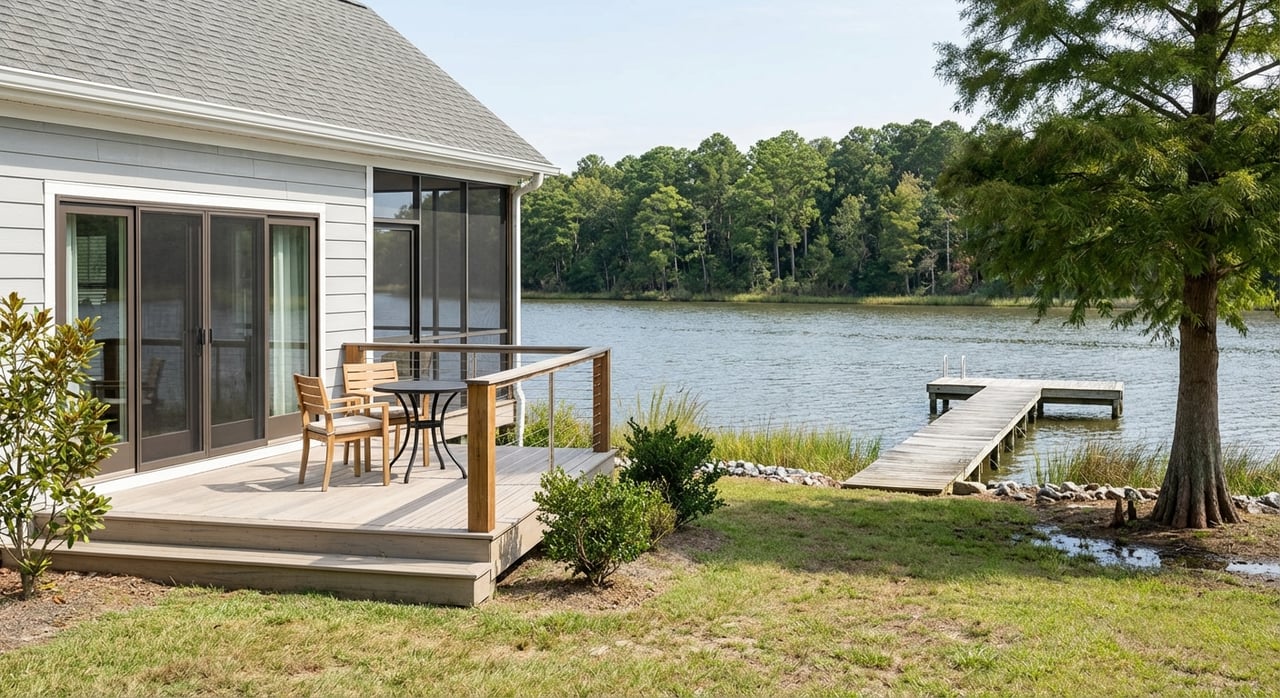
Picture your morning coffee with the Rappahannock River glinting just beyond the deck and a crab pot quietly soaking off the dock. If you are drawn to big skies, open water, and a slower, small‑town pace, Essex County can feel like it was made for you. In this guide, you will learn how riverfront properties here actually work, from docks and shoreline care to flood, septic, and seasonal life details. Let’s dive in.
Why Essex riverfront appeals
Essex County sits on Virginia’s Middle Peninsula with the Rappahannock River shaping daily life. The vibe is calm and rural, with Tappahannock as the hub for grocery runs, marinas, and a few river‑centric outings. If you want water access without the crowds, this stretch of the Rappahannock and its creeks offers that balance.
You will find panoramic river views, protected creek coves, and wide marsh vistas, all within a practical drive of the Richmond area. Many buyers choose Essex County for second homes or downsizing with easy boating, fishing, and birding at their back door.
Where the water is
The Rappahannock defines Essex County’s northeast boundary, and the shoreline breaks into tidal creeks and marshes as you move inland. Common waterways include Hoskins Creek, Piscataway Creek, Mount Landing Creek, and Occupacia Creek. These tributaries vary in depth and exposure, which matters for wave energy, docking options, and the type of shoreline protection that fits.
Tappahannock anchors much of the county’s public water access and services. You will also find ramps and smaller marinas near Bowlers Wharf and along several creeks, which keep everyday boating simple.
Property types explained
Not all waterfront is the same. Understanding the differences helps you match the property to your lifestyle and maintenance expectations.
- Direct riverfront. Wide views and bigger water typically mean more wind and wave energy. Expect more attention to shoreline stabilization and dock design.
- Creekfront. Narrow, tidal tributaries like Hoskins or Piscataway offer quieter water and more protected slips. Depths and tidal swings can limit larger boats.
- Marshfront or mudflat. Beautiful, wildlife‑rich vistas with softer ground. Often great for kayaks and birding, but not always ideal for a motor‑boat dock.
- Near‑water with views. Homes across a road or marsh from the water can still deliver views and lower maintenance. Access may be visual only unless a deeded path or community pier exists.
- Access types. Some parcels have private docks, some use a community dock, and others have no direct water access. The type of access shapes daily use and value.
Access, riparian rights, and permits
Waterfront ownership does not always equal unrestricted use of the water. In tidal settings, the state generally holds submerged lands in public trust. It is important to confirm what your deed includes and what your riparian rights allow. You can read an accessible primer on the concept of riparian rights.
In Virginia, docks, piers, and most work in tidal waters are regulated by the Virginia Marine Resources Commission. Projects that involve in‑water work or dredging often also require review through the U.S. Army Corps of Engineers Regulatory Program. Applications are site specific and can take time, so plan ahead if you hope to add or repair a dock.
What to ask before you offer
- Request copies of any past dock, shoreline, or dredge permits and construction records from the seller.
- Verify any community‑dock rules or easements noted in the deed.
- Check water depths at low tide if boating access is a priority.
Shoreline care and living shorelines
Virginia policy favors “living shorelines” where feasible. These are soft or hybrid treatments like marsh plantings and low rock sills that reduce erosion while supporting habitat. The Virginia Institute of Marine Science explains how and why these systems are preferred in its Living Shorelines FAQ.
Traditional bulkheads and revetments still have a place on high‑energy shorelines, but they can require more frequent hard‑hat maintenance. Expect routine tasks such as vegetation management, joint inspections of bulkheads and piers, and periodic piling or float repairs. Dredging for slips or channels, when needed, is regulated and can be expensive, so it is smart to budget for it and review records before you buy.
Boating, fishing, and public access
For launches and fuel, Tappahannock offers public landings and marinas that make getting on the water easy. You can find local ramps and marina options, including June Parker Marina and Garrett’s Marina, on the county’s tourism page for boating and things to do.
If you fish, know that the Route 360 bridge at Tappahannock is commonly treated as the freshwater and saltwater license boundary. Species vary by season, with mixes of catfish, perch, striped bass, red drum, and shallow‑water visitors as conditions shift. Local charters and guides operate out of Tappahannock, and bait and tackle are easy to find in town.
Flood risk and insurance basics
Always review the FEMA map for a specific address. The FEMA Flood Map Service Center shows Special Flood Hazard Areas and zone designations that may affect lending and construction. If a structure sits in a mapped flood zone, consider obtaining an elevation certificate to better understand risk and insurance pricing.
Federal flood insurance has shifted to a system called Risk Rating 2.0, which prices policies more specifically by property characteristics such as distance to water and structure elevation. The Congressional Research Service provides a clear overview of how this change works in its summary of Risk Rating 2.0. Talk with an insurance agent early so premiums do not surprise you after you fall in love with a place.
Septic, wells, and rural services
Many riverfront homes in Essex County rely on onsite septic and private wells. Suitability, drainfield siting, and capacity are routine due‑diligence items that can influence future renovations. The Three Rivers Health District at the Virginia Department of Health handles permits, records, and site evaluations, and you can find contacts on the VDH Environmental Health page.
Plan to review permit history and recent inspections and confirm capacity if you expect to add bedrooms or finish a basement. If a system needs replacement, explore modern options that can work on constrained sites, and price the upgrade with a licensed provider.
Seasons and storm planning
Summer is peak season on the Rappahannock. Marinas are busy, charters are running, and shops keep fuller hours. Fall brings standout fishing and quieter streets. Winter slows down, which is perfect for off‑season repairs or shoreline projects.
Be storm‑aware. The Atlantic hurricane season historically runs from June 1 through November 30. The National Hurricane Center posts official updates on its season overview page. If you own a boat, discuss securement and haul‑out plans with your marina, and review your insurance coverage for wind and flood scenarios.
Nature and conservation
Essex County is part of a larger conservation corridor that protects significant marsh and river habitats. The Rappahannock River Valley National Wildlife Refuge and nearby conserved tracts support bald eagles, waterfowl, and classic tidal‑marsh scenery. For a sense of the broader parks and refuge context, browse the regional overview from the Rivah Visitor’s Guide on parks and recreation.
Quick buyer checklist
Use this list to keep your due diligence on track.
- Verify the FEMA flood map for the address. Ask the seller for any elevation certificate.
- Confirm deeded rights and any community‑dock rules. Clarify what your riparian rights include.
- Review past permits and records for docks, shoreline work, or dredging.
- Ask marinas about slip availability, fuel, haul‑out, and winter storage if you plan to boat.
- Pull septic and well permit history. Schedule a current inspection and capacity check.
- Talk with an insurance agent about expected flood premiums under Risk Rating 2.0.
- Walk the shoreline at both low and high tide to see erosion patterns and water depth.
- Budget for shoreline care. Explore whether a living shoreline could fit the site.
Work with a builder‑savvy local team
Buying riverfront is equal parts lifestyle and logistics. You want clear answers on docks, shorelines, flood, and septic before you commit. Our team pairs nearly three decades of representation with hands‑on builder know‑how, so you get practical guidance on value, feasibility, and next steps.
If you are exploring waterfront in Essex County or across the Northern Neck, let’s talk through your plan, timeline, and must‑haves. We will help you focus your search, line up the right local experts, and move forward with confidence. Ready to start? Connect with David Berberich for a quick consult.
FAQs
What is the process to build or repair a dock on the Rappahannock in Essex County?
- Most tidal projects need permits through the Virginia Marine Resources Commission and may also require review by the U.S. Army Corps of Engineers, so plan for site‑specific applications and timelines.
How do I check flood risk for an Essex County riverfront home?
- Search the address at the FEMA Flood Map Service Center and request an elevation certificate to refine risk and insurance pricing with your agent.
How could Risk Rating 2.0 change my flood insurance cost on a waterfront property?
- Pricing now considers more property‑specific factors like elevation, distance to water, and replacement cost, so review the Risk Rating 2.0 overview and get quotes early.
What should I review for septic and well systems on an Essex waterfront lot?
- Confirm permit history and schedule inspections with guidance from the Three Rivers Health District, especially if you plan renovations or added bedrooms.
Where can I launch a boat or find a slip near Tappahannock?
- Start with county listings for ramps and marinas, including June Parker Marina and Garrett’s Marina, on the Essex County tourism page.